
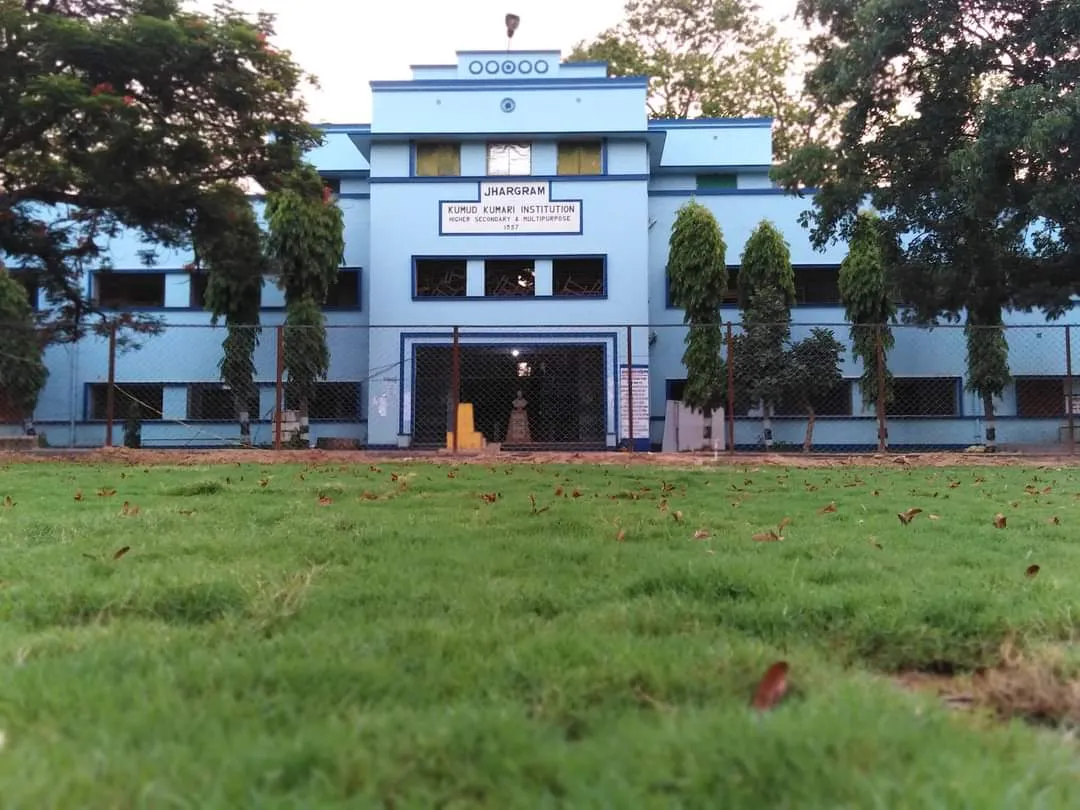
For generations of families in Jhargram, Kumud Kumari Institution has been more than a school. It is a civic landmark, a meeting place of memory and ambition, and one of the institutions that helped education take root in a region once defined by forest, distance and limited public facilities.
From a local school to a recognised institution
The roots of formal schooling in Jhargram developed gradually under the patronage of the Jhargram Raj family. The institution’s official history records an important step on 5 October 1899, when a meeting resolved to establish a minor school. As Jhargram grew into a subdivisional town, residents, education officials and the Raj estate worked to raise the school’s academic level.
Those efforts resulted in the establishment of a High English School. The school received recognition from the University of Calcutta in 1924, the year now associated with the formal foundation of the institution. Prafulla Kanti Ghosal served as the first headmaster of the High English School, while Radhashyam Bose—who joined on 4 August 1925—guided it for nearly four decades.
1929: the name Kumud Kumari Institution
Two years after its first successful matriculation candidates, Jhargram H.E. School was renamed Jhargram Kumud Kumari Institution, honouring Kumud Kumari Devi and linking the school permanently with the educational legacy of the Jhargram Raj family.
A school shaped by public-minded leadership
The story of KKI is inseparable from Raja Narasingha Malla Deb, whose reign is remembered as a period of educational and civic development in Jhargram. Inspired by his mother Kumud Kumari Devi and guided by educationist Debendra Mohan Bhattacharya, he supported a network of schools and public institutions across the region. Kumud Kumari Institution became one of the most enduring expressions of that commitment.
In 1927, four students passed the matriculation examination with distinction. Among them was Nandagopal Sengupta, who later became known as a journalist and literary figure. Such early achievements helped establish the school’s reputation well beyond the town.
Growth of the campus and curriculum
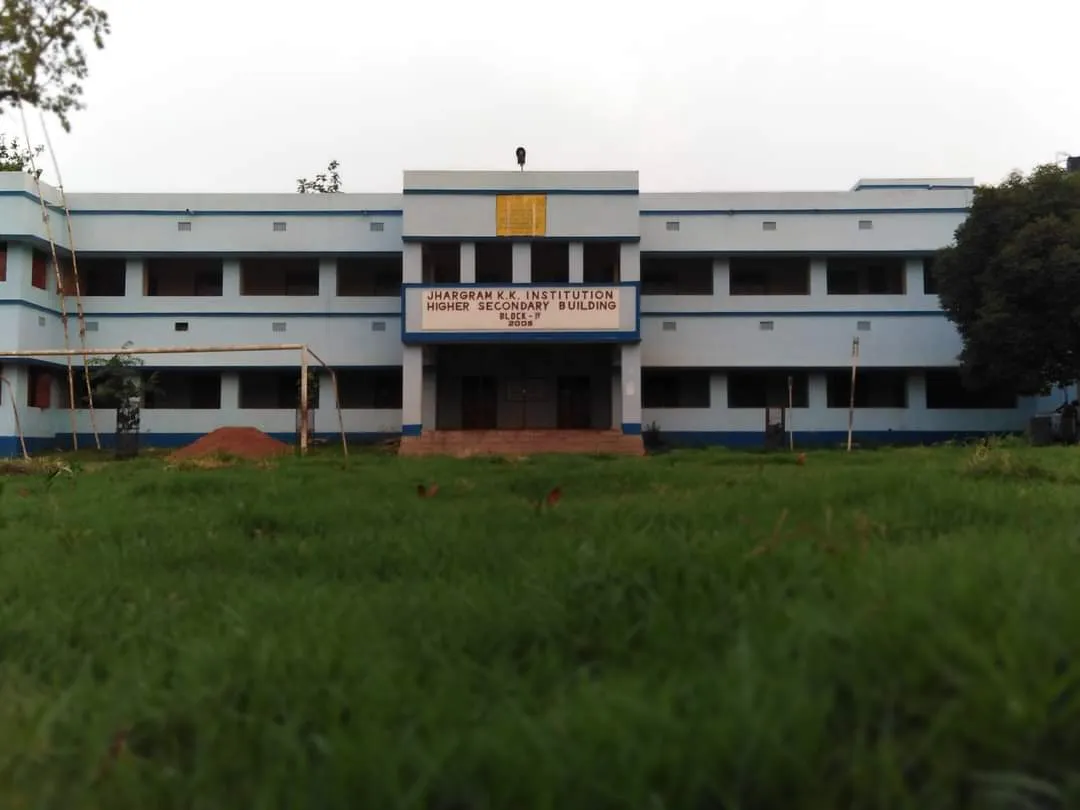
Over time, the school expanded into a large multi-storey campus with nearly forty rooms. A separate two-storey Higher Secondary building was constructed on the southern side of the premises, and a two-storey hostel was developed with support from the Paschimanchal Unnayan Parshad.
The institution’s official account also records the establishment of a model classroom, a mini museum and a mini gym in 2018, reflecting an effort to combine academic learning with physical fitness and practical exposure. Alongside the Bengali-medium day session, English-medium instruction began in 2017 under the School Education Department. Vocational courses further broadened the opportunities available to students.
Since 1924
A century of recognised secondary education in Jhargram.
Classes V–XII
Secondary and higher-secondary education with multiple streams.
Generations
An alumni community extending across professions and places.
Academic achievement and living tradition
KKI has produced students who have distinguished themselves in public life, education, literature and many other professions. More recent state-level examination achievements include students appearing among the leading ranks in Madhyamik and Higher Secondary examinations. These successes reflect both individual dedication and the sustained work of the school’s teachers.
Yet the institution’s importance cannot be measured only through examination results. Its real legacy lies in continuity: classrooms where successive generations have studied, a playground woven into school memories, teachers whose influence travels far beyond the campus, and an alumni community that continues to identify deeply with the school.
As Kumud Kumari Institution moves beyond its centenary, it remains a bridge between Jhargram’s royal-era commitment to public education and the aspirations of students growing up in a modern district.
A landmark that continues to serve
Today, Jhargram Kumud Kumari Institution stands in Jhargram West as a government-aided higher-secondary school. The campus has changed, new buildings and learning facilities have appeared, and the curriculum has widened. What has remained constant is the school’s place in the public life of Jhargram.
Its history is ultimately a story of education as community-building—of a town investing in knowledge, of teachers sustaining an institution across decades, and of students carrying the name of KKI into the wider world.